

The legendary rivalry between English & Australian cricket has been shaped through iconic figures. Here, fans recount personal most cherished cricketers from men's Ashes history.
Jonny Bairstow
On the topic of a favourite cricketer, the choice is Jonny Bairstow. His journey during Ashes contests aptly encapsulates the highs and lows of an English player. It began with 2013, where he sacrificed his attacking instincts to graft with the experienced Ian Bell. Later that year, he stepped up to replace wicketkeeper Matt Prior, facing the fearsome pace of Mitchell Johnson despite no red-ball preparation for three months.
He enjoyed a series-winning comeback during 2015 and remains the only English batter with two Ashes hundreds on Australian soil since 2011, a feat managed in spite of intense local press attention. A poor series came during 2019, though there was a crucial cameo in the Leeds Test assisting the famous Ben Stokes and Jack Leach. After returning for the 2023 series, a stunning unbeaten 99 at Old Trafford would have been robbed of a series-turning status by inclement weather.
Syd Barnes
No bowler inspire such awe like the wonderful Syd Barnes. His figures taking 13 wickets in 80 gruelling overs during the 1901-02 Ashes Test stands as a monument to his genius. One can only wonder what more he might have achieved had he been an easier man to handle. With an incredible haul of 6,229 wickets at a cost of just 8.33, many consider the greatest bowler ever. Studying his records in childhood was utterly enthralling. He was a glorious bastard, truly incomparable. In the words of cricket administrator Billy Griffith: “What was remarkable regarding him was that all his contemporaries thought him the greatest bowler. There was never any doubt about it.”
Richie Benaud
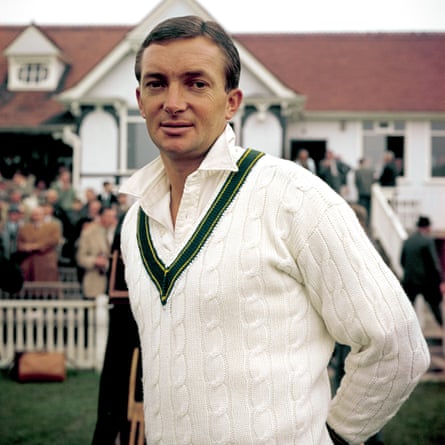
To countless fans, the ultimate Ashes cricketer is the iconic Richie Benaud. A move to high school in 1961 aligned with that year's Ashes, where the excitement was conjured by the glamorous Australian captain. He stood out from the rest; with style combined with audacity, offering contrast from the more traditional English game. He was eloquent, commanding captain who came known for positive, exciting cricket.
Memories from that season, when a lifelong love affair with cricket began, focus on the final day at Old Trafford. Watching intently a television, a young fan saw the home side require 256 runs. A good start saw Ted Dexter construct a widely acclaimed one of the great Ashes innings. Yet he fell for 76, taken by Wally Grout bowled of Benaud. Hope remained with skipper Peter May arriving to bat. Benaud bowled and May steer the ball to the on side. The next ball, he pitched outside leg, it turned sharply from the rough and hit the stumps. May was dismissed for a duck, the silence palpable. Richie won the match with figures 6 for 70 , thus Australia retained the Ashes. A moment of mixed feelings—wanting an England win yet marvelling at a true hero.
Ian Botham
He is the greatest England cricketer. Relentless, inspirational, brilliant. For Headingley 1981, Old Trafford 1981, the victorious tour of Australia, not forgetting his iconic retort about Merv Hughes. A hero not just for his charity work and his tremendous fortitude.
The Underrated Harry Boyle
History often overlooks figures like Harry Boyle, who should rightfully be among any list of most important cricketers in Ashes history. Boyle served as Fred Spofforth's new-ball partner in the iconic 1882 match, and his contribution was as vital as his partner's in securing victory. Indeed, it was Boyle who dismissed Edmund Peate to clinch that historic game. Although Spofforth is rightly hailed as the father of pace bowling, his teammate was humble , self-effacing, always prioritising the collective. This modesty has led to his legacy becoming overshadowed, even though he was widely recognised as an important personality in the sport's development.
Don Bradman
The choice must be Sir Don Bradman. Whilst Shane Warne stands as a giant, the sheer weight of scoring Bradman amassed versus the old foe, coupled with his tactical acumen, establishes his status as more than a great player but as the only possible answer. An Ashes average just shy of ninety, two triple centuries, and a brilliant double-hundred after a bold decision to reverse the batting order to protect his main batters from a damp wicket in Melbourne in 1937.
Though not alive in his time, every enthusiast becomes familiar with his exploits in the 1930s , particularly, the Invincibles tour. While many recall his last innings zero preventing a 100+ average, some treasure footage of his practice for hours against a water tank, or witnessing him withstand the brutal Bodyline series to still average with a 56 average in a torrid series for batsmen. He endures as the ultimate batsman for countless fans.
Mike Brearley
He elevated the craft of captaincy, with its critical role, to unprecedented heights. He epitomised an era showing that success against Australia, especially in Australia, needed more than effort or power. He motivated with considered, intelligent leadership, fostering a culture in which his players' abilities could flourish. His understanding of situations, conditions, and player psyches was masterful precisely when a shift in momentum was required.
This was a nuanced, nuanced approach {that challenged|contradict


